
We have many years of experience with KTL coating of small metal parts, including the design of suitable hanging methods and stable series production.
Automated dip process
The KTL coating is applied by immersion in a fully automated process. Electrodeposition creates an even layer across the conductive surface. We use PPG POWERCRON® 6200HE and a multi-stage Henkel pretreatment.
Thin and high-build KTL
We set the coating thickness to the customer specification and the technical needs of the part.
- Thin-film KTL: 15–25 µm
- High-build KTL: 35–60 µm
Size and weight limits
Every part is checked for shape, balance and hanging options. These are maximum values and may not suit every design.
- Maximum part size: 1250 × 660 × 500 mm
- Maximum part weight: 30 kg
- Transport frame: 1290 × 700 × 540 mm
Multi-stage surface preparation
Before coating, parts go through multi-stage chemical pretreatment with zinc phosphating using Henkel technology. A separate programme is available for aluminium and zinc-coated parts.
This preparation can also be used on its own, without KTL paint, before powder or wet coating.
What the part needs
The design must allow reliable electrical contact, venting of cavities and free drainage. For new parts, we recommend checking the design and hanging method before sampling.
KTL as a base coat
KTL can be used on its own or under a powder or wet topcoat.
- Zinc phosphate → KTL
- Zinc phosphate → KTL → powder topcoat
- Zinc phosphate → KTL → wet topcoat
Process checks
We mainly check coating thickness, appearance and adhesion. Any further tests and records are agreed for the project.
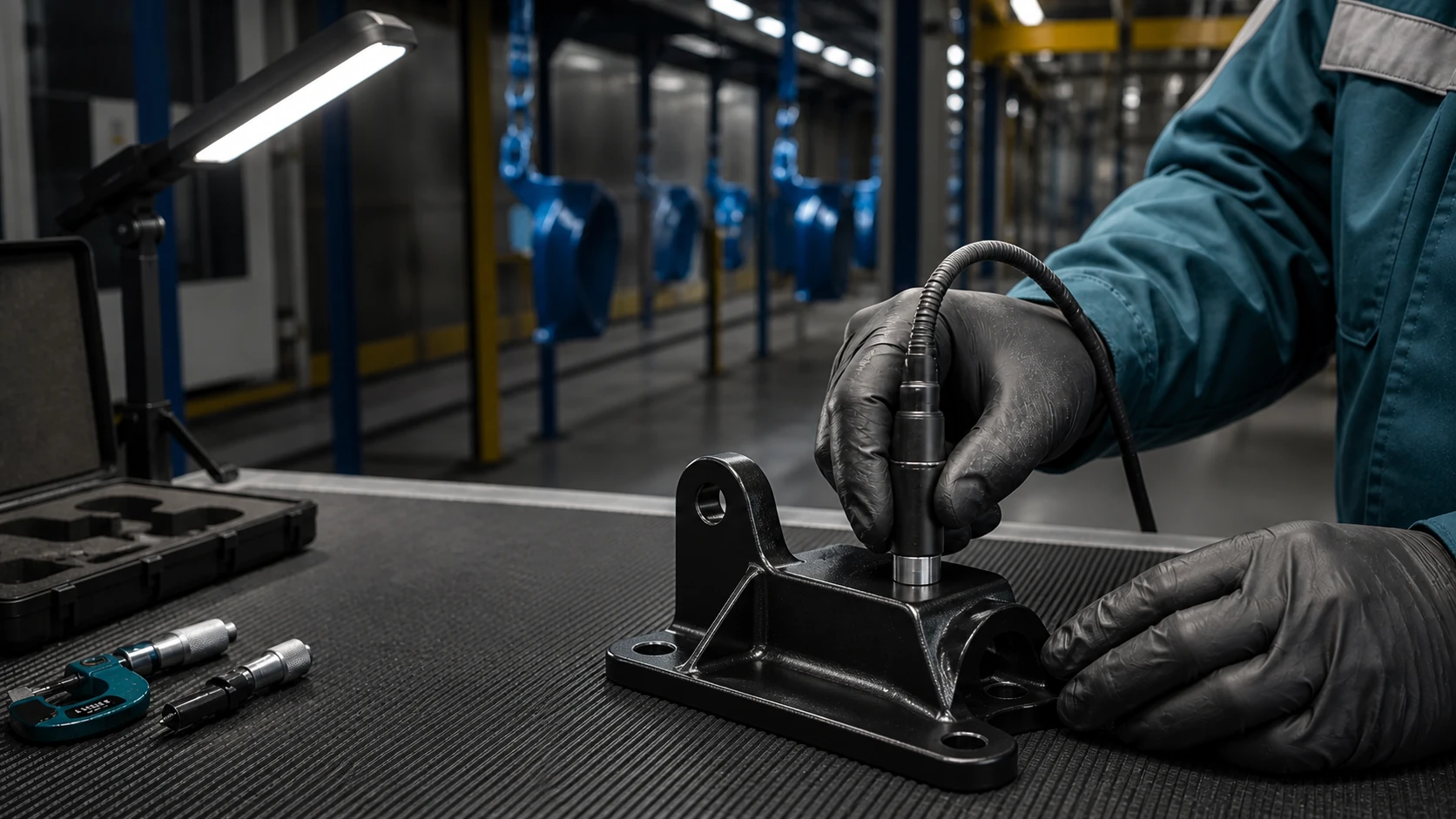
Quality at every step
A clear brief, suitable part design, a clean input surface and correct racking create the right conditions for a stable result. If something is off, we find the cause and prevent it happening again.
Let us find the right surface treatment
Send us a drawing or photo, the material, dimensions, weight, quantity and the result you need. We will suggest the right process and next steps.